
Where Are You From?
Diogenes called himself a citizen of the world. Our generation made a similar choice. This edition is about what home actually requires - and why nobody told us we'd have to build it ourselves.

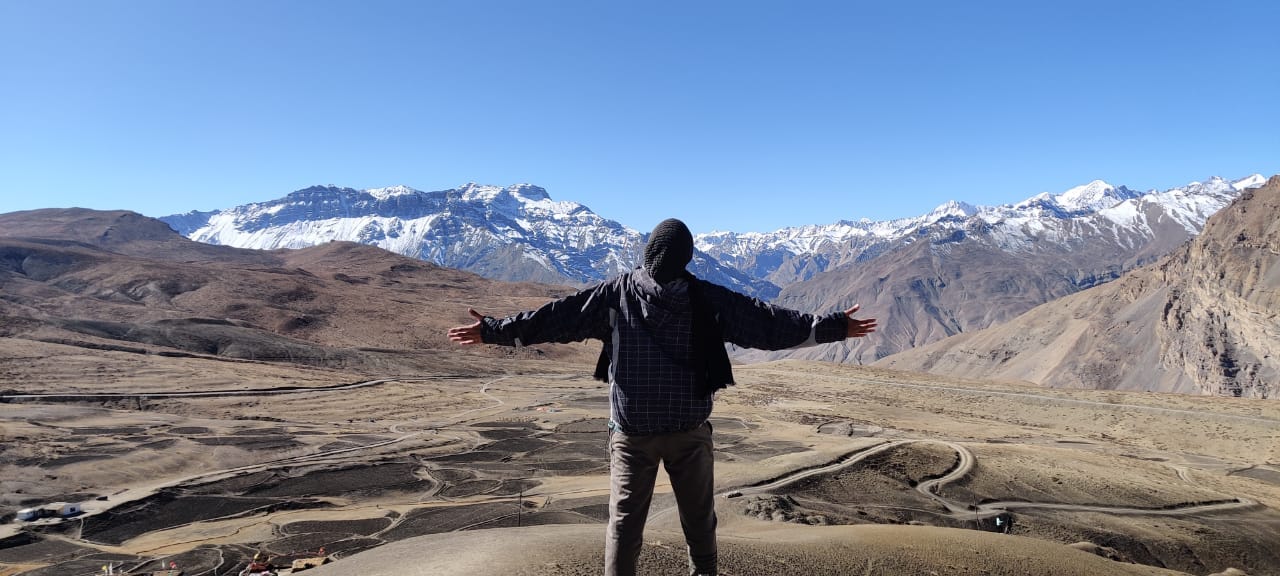
“I am a citizen of the world.”
Asked where he came from, the Greek philosopher Diogenes gave an answer that scandalized Athens.
It was 4th century BC, and in ancient Greece, this was an oxymoron. Every Greek derived their identity from their polis - the specific city-state that gave them language, law, ritual, and belonging. To claim citizenship of the world was to claim membership of nothing. It was, by the standards of the time, a kind of homelessness dressed up as enlightenment.
Diogenes meant it as a provocation. He lived in a barrel. He owned nothing. He belonged nowhere deliberately, as a statement against what he considered the smallness of tribal loyalty. History has remembered him as a philosopher. What history tends to forget is that he was also, by every conventional measure, a man without a home.
The pertinent question his answer raised has never been satisfactorily answered. What does it mean to belong somewhere? Is home a place you are born into, or one you choose? Can it be carried, or must it be rooted? And what happens to a generation that has, largely without noticing, answered Diogenes in the affirmative?
About two and a half thousand years after Diogenes, a very different group of people attempted a very different answer to the same question.
In 70 AD, the Roman army destroyed Jerusalem and scattered the Jewish people across the known world. What followed was one of the most extraordinary experiments in collective identity that human civilization has ever produced. For nearly two thousand years, a people maintained a coherent sense of who they were, what they believed, how they lived, and where they ultimately belonged - without a physical homeland.
Their secret has been a deliberate process.
In the absence of land, the Jews built a portable homeland out of four precise ingredients: shared text, shared ritual, shared memory, and physical community. The Talmud became, as the scholar Daniel Boyarin has argued, a diasporist manifesto: a traveling homeland. Wherever a Jewish community gathered, they carried the same book, observed the same calendar, recited the same prayers oriented toward the same city. Jewish prayerbooks were maps of sacred geography, reminding worshippers of Jerusalem whether they were praying in Casablanca or Kraków. As the Talmud itself declares: “Wherever Israel went into exile, the Shekhinah went with them.”
The result was belonging without land. Identity without fixed coordinates. Portable homes - by virtue of carrying them deliberately across every displacement.
The average American moves 11.7 times in their lifetime. Most of those moves happen before 45. They move for education, for jobs, for relationships, for cheaper rent, for better weather. Each move is individually rational. The cumulative effect, across a generation, is a civilization in permanent transit.
The story is no different in India. The 2011 Census counted 450 million internal migrants - roughly 37% of the population. One in three urban Indians today is a migrant. The IIT graduate in Bangalore who grew up in Patna. The MBA from Ahmedabad who spent a decade in Singapore before returning to Mumbai. The consultant who has lived in four cities in eight years and answers the question “where are you from?” with a pause to ascertain his own answer before answering it for the world.
I have asked this question to many people of my generation, and the answers always fall into three categories.
Some say home is where they have built their new life - the city where they met their partner, raised their children, built their friendships. Home, for them, is not inherited. It is constructed. This is the diaspora answer, and it suggests that belonging is something that you make happen.
Some still long quietly for where they came from. The specific quality of an October evening in their hometown. The chai at a particular corner. The feeling of being known without having to explain yourself. They have built full lives elsewhere. Yet, the longing doesn’t go away. Bollywood has raked in millions leveraging this yearning of the millennials.
🎵
Mitti ki hai jo khushboo, tu kaise bhulayega?
Tu chahe kahi jaye, tu laut ke aayega
🎵
Tooti Chaarpaai Wohi
Thandi Purvaai Rasta Dekhe
Doodhon Ki Malaai Wohi
Mitti Ki Suraahi Rasta Dekhe
And some others call themselves citizens of the world. They have lived in enough places that no single one holds a claim. They feel comfortable everywhere, and entirely at home nowhere. They have chosen Diogenes, whether they know it or not. What they feel about that choice, in their most honest moments, is something only they can answer.
What all three have in common is this: the conditions that once made belonging automatic - staying close to where you were born, within the reach of the same community, the same landscape, the same rituals repeated season after season - have been replaced by conditions that make belonging something you have to build deliberately, or go without entirely.
And most people were never taught how to build it. Because for most of human history, they didn’t have to.
The diaspora communities understood something that modern mobility has forgotten. Home is a practice. It requires shared text - the stories a community tells itself about who it is. It requires shared ritual - the repeated acts that mark time together. It requires shared memory - the accumulation of experience that makes a group of people feel witnessed by each other. And it requires physical proximity - the simple, irreplaceable fact of being near the people who matter.
Modernity has made all four harder to sustain simultaneously. We move too often for memory to accumulate. We are too busy for ritual. We are too scattered for proximity. And the stories we tell ourselves are increasingly individualised - about personal achievement, personal growth, personal freedom - rather than about the communities we are part of.
I have moved between enough cities to have lost count of the version of myself that each one briefly held. I know what it is to arrive somewhere new and feel the particular exhaustion of having to rebuild from scratch: the friendships, the routines, the small anchors of daily life that make a place feel inhabited. And I know what it is to leave a place before that work is finished, carrying the half-built version of a home to the next city, where it will have to start again.
What I have come to understand, slowly and not without significant resistance, is that what I am craving is not a place. It is a set of conditions. A commune surrounded by nature, with the people I love close enough to walk to. Animals on a farm. Bread broken together. The basic needs of existence met in abundance, and the rest of the world held gently at a distance. I know how this sounds: utopian, impractical, all kinds of unfathomable. I have stopped being embarrassed by it. Because underneath the impracticality is something quite simple: the desire to be deeply rooted, in a place and among people, in a way that modern life seems almost architecturally designed to prevent.
The realistic version of this is what I will keep striving toward. However long it takes.
Diogenes was not wrong that belonging can be portable. The diaspora proved it. But they proved something else too - that portable belonging requires deliberate construction. You cannot simply call yourself a citizen of the world and expect to feel at home in it. You have to build your home. With specific ingredients. Over time.
The question worth sitting with this week is not where you are from. That answer is complicated, and probably getting more so.
The better question is: what are the ingredients of home, for you specifically? And are you actively building them, wherever you are? Or are you waiting to arrive somewhere that will finally feel like the right place, not quite realising that the feeling you are waiting for is not found. It is made.
Subscriber Spotlight
Garv Malik shared his thoughts on Yashraj Sharma’s piece The Wrong Kind of Ambitious.
“It also comes down to purpose. A luxury car or credit card points might keep the consulting monkey keep running on the hedonistic treadmill, but you never taste fulfilment.”
What we’re reading at Wyzr
The Other Side of Silence by Urvashi Butalia. In 1947, the Partition of India displaced fifteen million people in a matter of weeks - the largest forced migration in the 20th century. Butalia spent years collecting oral histories from survivors, and what emerges is a piercing human account of what people carried when they left, what they left behind, and what it meant to lose a home not gradually, as our generation has, but in a single, violent rupture. It’s heart wrenching, and yet, necessary reading to understand our history.
Did you enjoy this edition of Plain Sight? Write to me with your thoughts, including the homes you have inherited or the ones you have built. We will share the most compelling responses in a future edition.
Until next week.
Best,
Home is where my cats are. I understood this a few years ago.
Made me pause, made me think and after a lot of thought, I have come to the realization that - 1) the idea of home is deeply personal ergo subjective and 2) home is not a place to survive but is a place to live (given that one understands the difference between surviving and living).
Not sure if I was able to articulate my very intense and emotional response after reading this piece but glad that I came across it. Thank you for sharing. :)